Yes, compression clothing can support recovery, mainly by improving blood circulation and reducing post-exercise discomfort. However, its effectiveness depends on how, when, and for whom it is used. Compression garments are not a miracle solution, but when used correctly, they can play a valuable complementary role in a recovery strategy.
Athletes, fitness enthusiasts, and even people recovering from injury increasingly turn to compression wear to reduce soreness and speed up the return to training. But what does science actually say about it?
Key takeaways:
- Compression clothing may improve circulation and venous return.
- It can reduce muscle soreness and perceived fatigue after exercise.
- Benefits are modest but consistent when used properly.
What is compression clothing?
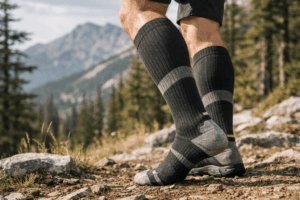
Compression clothing refers to tight-fitting garments designed to apply graduated pressure to specific body areas, usually the legs, arms, or torso. Common examples include compression socks, sleeves, shorts, tights, and tops.
The pressure exerted by these garments is strongest at the extremities and gradually decreases toward the heart. This design aims to support venous blood flow, limit fluid accumulation, and stabilize muscles during and after exercise.
Compression clothing is commonly used:
- During training or competition
- Immediately after exercise
- During long periods of inactivity (travel, standing, or sitting)
While initially developed for medical use, compression wear has become widely adopted in sports and fitness contexts.
How compression clothing supports recovery
Recovery after exercise involves multiple physiological processes: clearing metabolic waste, reducing inflammation, restoring muscle function, and minimizing soreness. Compression clothing may assist these processes through several mechanisms.
Improved blood circulation
One of the main proposed benefits is enhanced blood flow. Compression can help veins return blood to the heart more efficiently, which may:
- Improve oxygen delivery to muscles
- Accelerate removal of metabolic byproducts such as lactate
- Reduce pooling of blood in the lower limbs
This improved circulation may explain why some athletes report feeling less heavy-legged after wearing compression garments post-exercise.
Reduced muscle swelling
After intense activity, microtrauma in muscle fibers can lead to localized inflammation and swelling. Compression garments apply external pressure that may help limit excessive fluid buildup in the tissues.
By reducing swelling, compression wear can contribute to:
- Less stiffness
- Faster return of normal range of motion
- Improved comfort during recovery phases
Muscle stabilization and reduced oscillation
During movement, muscles vibrate with each foot strike or impact. Compression garments can reduce this muscle oscillation, which may lower mechanical stress on muscle fibers.
Although this effect is more relevant during activity, it can indirectly influence recovery by reducing cumulative muscle damage.
What compression clothing does not do
It is important to clarify expectations. Compression clothing:
- Does not replace proper sleep, hydration, or nutrition
- Does not dramatically shorten recovery time on its own
- Does not eliminate muscle soreness entirely
Its role is supportive, not curative. The benefits are generally moderate, but for consistent trainers, even small improvements can matter over time.
What does research say about compression and recovery?
Scientific studies suggest that compression clothing offers small but consistent recovery benefits, especially when worn after exercise rather than during performance.
Most findings point toward improvements in perceived muscle soreness, not necessarily in objective performance markers. In practical terms, athletes often feel better, even if strength or speed does not return faster in the short term.
Key data: Wearing compression garments post-exercise may reduce muscle soreness by around **10–20%** within 24–48 hours.
Who benefits the most from compression clothing?
Compression garments are not equally useful for everyone. They tend to be more beneficial for:
- Endurance athletes (running, cycling, triathlon)
- High-volume trainers with frequent sessions
- Individuals prone to leg heaviness or swelling
- People returning to activity after a break or mild injury
For occasional exercisers, the impact is often minimal.
Compression during exercise vs after exercise
Timing matters. Compression clothing seems more effective when used after training.
- During exercise: muscle stabilization and comfort, limited recovery effect
- After exercise: reduced soreness, improved circulation, better comfort
Many athletes wear compression garments for several hours post-workout, or even overnight during intense training blocks.
A practical limitation to keep in mind
Compression is helpful, but excessive pressure can backfire. Garments that are too tight may impair circulation rather than support it. Proper sizing is essential.
Used correctly, compression clothing can support recovery but it works best as part of a broader recovery routine, not as a standalone solution.
How to choose the right compression clothing for recovery
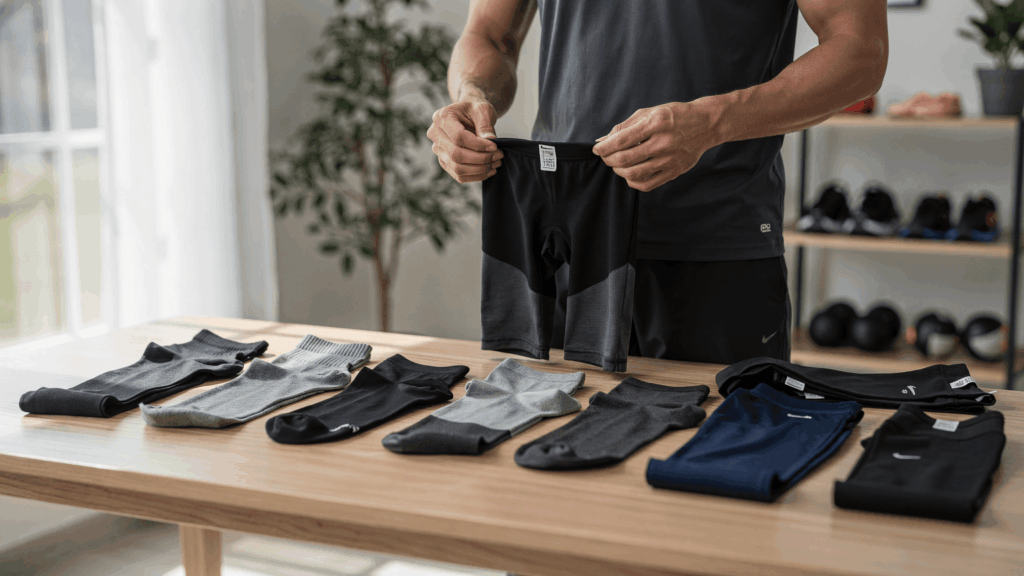
Not all compression garments provide the same benefits. Fit, pressure level, and usage context all matter if recovery is the goal.
Choosing the right compression level
For recovery purposes, moderate compression is generally more effective and better tolerated than very high pressure.
- Light compression: mostly comfort, minimal recovery effect
- Moderate compression: improved circulation and reduced soreness
- High compression: medical use, not ideal for daily recovery
If the garment feels restrictive or uncomfortable at rest, it is likely too tight.
How long should you wear compression garments?
Duration plays a key role in recovery benefits. Most users experience better results when compression clothing is worn:
- For 2 to 6 hours after training
- During long periods of standing or sitting
- Overnight only if comfort is good and pressure is moderate
There is no strong evidence that wearing compression for longer automatically increases benefits.
Practical checklist:
- Choose the correct size based on measurements
- Prefer moderate, graduated compression
- Wear post-exercise rather than only during training
Common mistakes that reduce effectiveness
Several factors can limit the benefits of compression clothing:
- Wearing the wrong size
- Using compression inconsistently
- Expecting immediate or dramatic results
- Relying on compression while neglecting sleep or nutrition
Compression works best when it supports, rather than replaces, basic recovery principles.
In summary: does compression clothing help recovery?
Yes, compression clothing can support recovery, mainly by improving blood circulation and reducing muscle soreness after exercise. The benefits are real but modest, and they work best when compression garments are worn after training, not as a performance enhancer.
Compression wear is most useful for people who train frequently, especially in endurance or high-volume sports. It may help reduce the feeling of heavy legs, limit swelling, and improve overall comfort between sessions.
However, compression clothing does not replace proper recovery basics such as sleep, hydration, nutrition, and rest. It should be viewed as a supportive tool, not a standalone solution.