Compression shorts in soccer are used to support muscles, reduce friction, and improve overall comfort during play. In simple terms, they help players move more freely while protecting the lower body from repeated stress. Worn under standard soccer shorts, they have become a common piece of equipment for amateurs and professionals alike.
Soccer places constant demands on the legs and hips. Sprinting, changing direction, sliding, and absorbing contact all create tension in the muscles and joints. Compression shorts apply light, uniform pressure around the thighs, hips, and glutes. This pressure helps stabilize muscles during intense actions without limiting mobility.
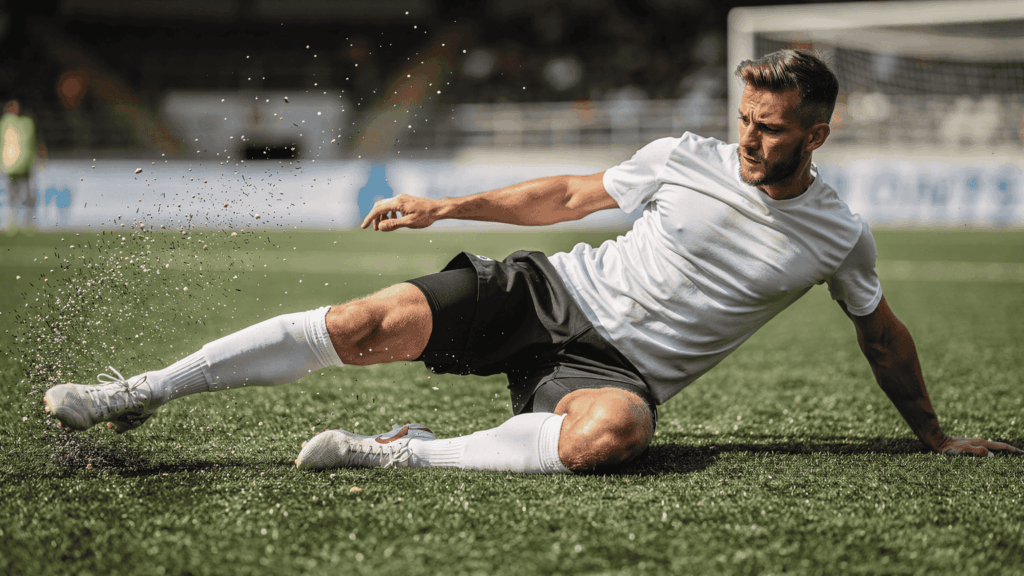
Another key purpose is skin protection. Sliding on grass or artificial turf can cause painful abrasions. Compression shorts create a barrier between the skin and the ground, helping reduce turf burns and irritation. For defenders and goalkeepers, this protective role is especially important.
Compression shorts also contribute to better body awareness. Many players feel more secure and “locked in” when wearing compression gear, which can improve confidence during matches. While they do not replace proper training or recovery, they support players by reducing distractions linked to discomfort or friction.
Key takeaways:
- Compression shorts provide muscle support during high-intensity soccer actions.
- They help reduce friction and turf burns when sliding or tackling.
- They improve comfort and confidence over the full duration of a match.
How compression shorts support performance in soccer
Compression shorts are not designed to make a player faster or stronger overnight. Their value lies in how they help the body manage effort more efficiently during repeated high-intensity actions. Soccer demands constant acceleration, deceleration, and changes of direction, all of which place stress on the lower-body muscles.
Muscle stability and movement efficiency
When running and cutting, muscles naturally vibrate with each foot strike. Over time, this micro-movement can increase fatigue. Compression shorts apply consistent pressure that helps limit excessive muscle oscillation, especially in the quadriceps and hamstrings. As a result, players may feel more controlled and stable during explosive movements.
This improved stability can support:
- Cleaner sprint mechanics
- Better balance during rapid direction changes
- More controlled landings after jumps
While compression does not directly boost performance metrics, it can help players maintain movement quality late in the game, when fatigue usually affects coordination.
Managing fatigue over a full match
Soccer matches last 90 minutes or more, with little rest. Compression shorts help reduce discomfort caused by muscle movement and friction, allowing players to stay focused on decision-making rather than physical irritation.
Some players also report a lower sensation of heaviness in the legs during the second half. This is often linked to improved muscle awareness and support, not to any artificial performance enhancement.
Performance vs perception
It is important to be clear: compression shorts are a supportive tool, not a shortcut. Their main benefit is improving comfort and perceived readiness. For players who train or compete several times per week, this can make a meaningful difference in how they feel on the field.
Protection, comfort, and injury-related benefits
Beyond performance support, compression shorts play a significant role in protection and comfort, especially in a sport as physical as soccer. Repeated contact with the ground, opponents, and the ball can lead to skin irritation and localized impacts, particularly around the hips and upper thighs.
Reducing friction and turf burns
One of the most practical uses of compression shorts is friction reduction. Sliding tackles, blocks, and goalkeeping dives expose the skin to rough surfaces. Compression fabric acts as a protective layer, limiting direct contact with grass or artificial turf.
This protection helps:
- Reduce turf burns and abrasions
- Limit chafing caused by sweat and movement
- Maintain comfort during long training sessions
For players who frequently slide or play on artificial pitches, this benefit alone often justifies wearing compression shorts.
Light impact protection
Some compression shorts include reinforced panels or padding around the hips and thighs. While these do not prevent injuries entirely, they can help absorb minor impacts and reduce bruising during contact or falls.
This is particularly useful for:
- Defenders engaging in tackles
- Goalkeepers diving and landing repeatedly
- Youth players adapting to physical play
It is important to note that compression shorts are not protective gear in the medical sense. They support comfort and confidence, but they do not replace proper technique or strength training.
Comfort and temperature regulation
Compression materials are designed to be breathable and moisture-wicking. By keeping sweat away from the skin, compression shorts help maintain thermal comfort, reducing the risk of overheating or irritation during intense play.
Overall, their protective role contributes to better match-to-match consistency by minimizing minor issues that can accumulate over time.
Who should wear compression shorts in soccer, and how to choose them
Compression shorts can benefit a wide range of soccer players, but their usefulness depends on playing style, position, and training frequency. They are not mandatory equipment, yet many players choose to wear them for added comfort and support.
Players who benefit the most
Compression shorts are especially useful for:
- Players training or competing several times per week, as they help manage repeated physical stress
- Defenders and goalkeepers, who slide and absorb contact more frequently
- Youth and amateur players, who may lack full muscle control and experience more friction-related discomfort
- Players returning from minor muscle issues, where light support improves confidence on the field
For these profiles, compression shorts can reduce distractions linked to discomfort and allow better focus on the game.
How to choose the right compression shorts
When selecting compression shorts for soccer, several criteria matter:
- Fit: They should feel snug but not restrictive
- Breathability: Moisture-wicking fabric is essential for long matches
- Durability: Reinforced seams handle repeated washing and movement
- Padding (optional): Useful for players who slide often
Checklist pratique :
- Snug fit without limiting movement
- Breathable, quick-drying fabric
- Flat seams to reduce chafing
Final thoughts
Compression shorts are used in soccer to provide muscle support, protection from friction, and improved comfort. They do not replace training, recovery, or proper technique, but they can support consistency and confidence across a full season. For many players, that added comfort makes a noticeable difference match after match.