
Yes, compression socks can be worn with shorts, as long as the outfit looks intentional and fits the situation. The simple rule is this: compression socks with shorts work when function comes first, and style supports it not the other way around.
Originally designed for medical and performance purposes, compression socks are now common in travel, sports, recovery, and daily circulation support. In warm weather or active contexts, wearing shorts is often the most practical choice. The challenge is not whether it’s allowed, but how to do it without looking mismatched.
This guide explains when compression socks and shorts make sense, what visual rules matter, and how to avoid the most common mistakes.
Key points :
- Compression socks can be worn with shorts when the context justifies it
- Simple outfits make visible compression look intentional
- Function and fit matter more than trends
Why wearing compression socks with shorts feels “wrong” to some people
The hesitation usually comes from habit, not logic. Compression socks were long associated with hospitals, long-haul flights, or post-surgery recovery. Seeing them paired with shorts can feel visually surprising, especially in casual settings.
Three common concerns explain this discomfort:
- Compression socks are tall and noticeable
- They draw attention to the calves and lower legs
- They can look medical if poorly styled
However, visibility is not a flaw it’s a design feature. Compression works through graduated pressure, strongest at the ankle and decreasing upward. That structure requires full-length coverage, which naturally makes the socks visible when worn with shorts.
When compression socks and shorts make sense
This combination works best when comfort, health, or performance is the priority.
Sport and physical activity
Compression socks are widely accepted with shorts in active environments. They are commonly worn for:
- Walking and hiking
- Gym training and functional workouts
- Running warm-ups or recovery sessions
- Cycling and endurance activities
In these cases, compression socks signal muscle support and recovery awareness, not a style mistake.
Travel and long periods of sitting
During flights or long drives, compression socks help reduce leg swelling and blood pooling. Wearing shorts improves comfort, airflow, and mobility especially in warm climates.
A key point often overlooked: visible compression during prolonged sitting supports circulation, which explains why many travelers choose this combination.
Daily circulation support
Some people wear compression socks daily due to circulation issues or standing occupations. For them, shorts are a practical choice, not a fashion decision. In this context, function clearly outweighs appearance.
Choosing the right sock height and color
When wearing compression socks with shorts, two elements matter most: height and color. Getting these right is what makes the outfit look intentional instead of awkward.
Sock height: what actually works
Not all compression socks pair equally well with shorts.
| Sock height | Works with shorts | Why |
| Knee-high | Yes | Best compression and clean vertical line |
| Mid-calf | Yes | More casual, slightly less medical |
| Over-the-knee | No | Visually unbalanced |
| Ankle-length | No | Not true compression socks |
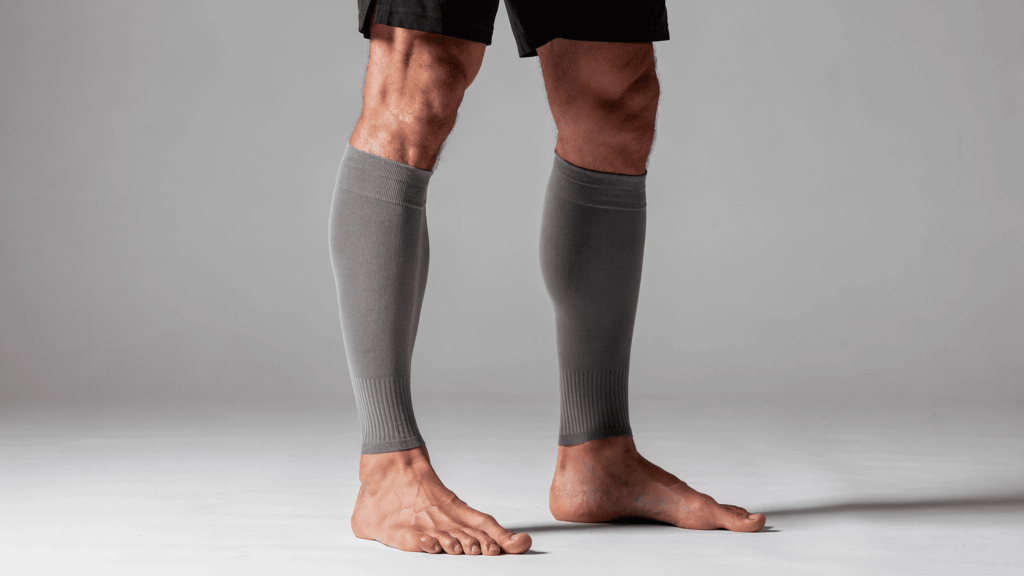
Knee-high compression socks are the standard choice. They offer the most effective compression and look structured when paired with shorts. Mid-calf versions can work in casual settings but should still fit snugly.
Color rules that make the look intentional
Color is what separates a functional outfit from a sloppy one.
Best color choices:
- Black
- Dark grey
- Navy
- White (mostly for sports or summer wear)
Avoid:
- Loud patterns in casual settings
- High-contrast colors that clash with shorts
- Mixing multiple bold tones
A simple guideline: your socks should visually connect with either your shoes or your shorts. If they don’t, the outfit feels disjointed.
Practical checklist :
- Choose knee-high or mid-calf socks
- Stick to neutral colors
- Match socks to shoes or shorts
Shoes and situations to avoid
Shoes can either support the look or completely break it when wearing compression socks with shorts. The goal is to keep the outfit visually coherent and appropriate for the context.
Shoes that work
Compression socks pair best with shoes that suggest movement or comfort.
Good options:
- Running shoes
- Training shoes
- Clean, minimal sneakers
These styles naturally align with the purpose of compression socks and help the outfit feel intentional.
Shoes to avoid
Some shoes create a visual mismatch and should be avoided with compression socks and shorts.
Avoid:
- Dress shoes
- Sandals or flip-flops
- Heavy boots
These combinations make the socks look out of place and remove the functional logic of the outfit.
When compression socks with shorts don’t work
There are situations where this pairing feels inappropriate, regardless of styling.
Avoid wearing compression socks with shorts in:
- Formal or professional settings
- Social events where style expectations are high
- Situations where compression isn’t needed
A useful reference point: visible compression makes sense when there’s a clear reason for it. Without that reason, the outfit may feel forced.
Common mistakes and final advice
Wearing compression socks with shorts works best when the intention is clear. Most mistakes come from trying to “hide” the socks instead of integrating them into the outfit.
Mistakes to avoid
- Wearing socks that are too loose or wrinkled
- Choosing bright or patterned socks in casual settings
- Pairing compression socks with inappropriate shoes
- Wearing them when there is no functional reason to do so
A subtle but important point: compression socks apply graduated pressure, usually strongest at the ankle. If the socks slide down or fold, that pressure distribution is reduced, making them less effective and less comfortable.
Quick recap: how to wear compression socks with shorts
- Keep the outfit simple and functional
- Choose knee-high or mid-calf socks
- Stick to neutral colors
- Pair with sport or casual sneakers
- Wear them when there is a clear purpose (activity, travel, recovery)
When these rules are followed, compression socks with shorts don’t look awkward they look intentional.
Wearing them with confidence
Confidence matters more than trends. Compression socks are a health and performance tool, not a fashion mistake. When worn correctly, they communicate practicality and self-awareness rather than poor style.