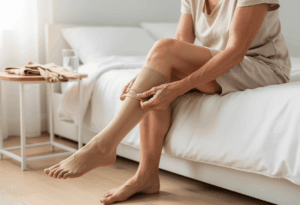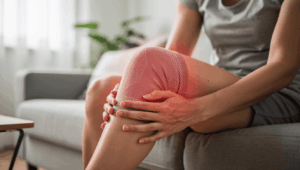
Choosing the correct size is essential for compression therapy effectiveness. Compression stockings must fit precisely: too tight may restrict circulation, too loose reduces therapeutic benefit. The basic rule is simple measure your legs in the morning, before swelling develops, using a flexible measuring tape and standing upright.
Key points to remember :
- Measure early in the morning when swelling is minimal.
- Use a soft measuring tape and measure directly on the skin.
- Record ankle, calf, and leg length measurements for accuracy.
Accurate measurement ensures the stocking delivers the intended graduated compression, meaning the pressure is strongest at the ankle and gradually decreases upward. Incorrect sizing can reduce effectiveness by more than 30 %, making proper measurement one of the most important steps.
Why proper sizing matters
Compression stockings are commonly used to help manage circulation concerns such as swelling, prolonged standing fatigue, or conditions like chronic venous insufficiency. The effectiveness of compression depends largely on precise anatomical measurements, not shoe size or clothing size.
Improper sizing may cause:
- Insufficient compression and poor symptom relief
- Rolling or slipping stockings
- Localized pressure discomfort
- Reduced durability due to overstretching
Essential measurements required
To determine the correct size, you typically need three key leg measurements:
- Ankle circumference — measured at the narrowest point above the ankle bone
- Calf circumference — measured at the widest part of the calf
- Leg length — measured from the floor to the bend of the knee (for knee-high stockings)
These three numbers allow manufacturers to determine the correct compression size range.
Basic measurement table
| Measurement | Where to measure | Why it matters |
| Ankle circumference | Narrowest part above ankle bone | Determines base compression pressure |
| Calf circumference | Widest calf area | Ensures correct pressure distribution |
| Leg length | Heel to knee crease | Prevents stocking slippage |
Because sizing systems differ by brand, always compare your results with the manufacturer’s chart. Even a 1–2 cm variation can change the recommended size.
Step-by-step: how to measure legs for compression stockings
Correct sizing starts with simple step-by-step measurements taken while standing. Always measure both legs, because slight size differences are common.
Step-by-step measuring process
- Measure ankle circumference
Place the tape at the narrowest point above the ankle bone. Keep the tape snug but not tight. - Measure calf circumference
Measure the widest part of the calf, keeping the tape level around the leg. - Measure leg length
For knee-high stockings, measure from the floor to the bend behind the knee while standing straight.
These three measurements determine most standard compression sizes and answer the common question how to measure legs for compression stockings correctly.
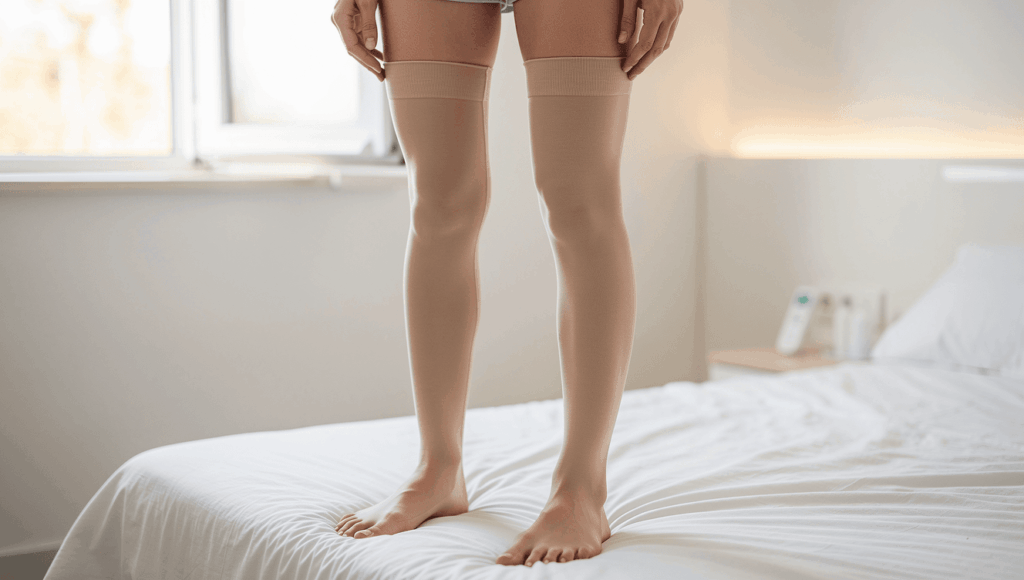
How to measure for thigh high compression stockings
Thigh-high stockings require additional measurements:
- Thigh circumference at the widest part of the upper leg
- Full leg length from the floor to the top of the thigh where the stocking should end
These extra measurements ensure proper stay-up positioning and prevent slipping.
Practical checklist :
- Measure both legs and use the larger measurement if they differ.
- Stand upright while measuring for accurate length values.
- Write down all results before checking the size chart.
How to measure for TED stockings compression
When measuring how to measure for TED stockings compression, the same main circumferences are required, but healthcare providers may also request:
- Calf length
- Thigh length (for thigh-length hospital stockings)
Because TED stockings are often used post-surgery, precise sizing is especially important to ensure medical-grade compression performance.
Common mistakes when measuring compression stockings
Even small measurement errors can lead to poor fit and reduced effectiveness. To ensure the correct compression size, avoid the most frequent mistakes below.
Measuring at the wrong time of day
Legs naturally swell during the day. Measuring in the evening may increase circumferences by 1–2 cm, which can change the recommended stocking size. Always measure in the morning, before prolonged standing or walking.
Measuring over clothing
Measurements should be taken directly on the skin, not over pants or socks. Fabric thickness can distort results and lead to incorrect compression levels.
Pulling the tape too tight or too loose
The measuring tape should be snug but not compressing the skin. Pressing too tightly can reduce the circumference value and result in stockings that feel overly tight.
Using only one measurement
Some people measure only the calf, but proper sizing requires at least:
- Ankle circumference
- Calf circumference
- Leg length
For how to measure for thigh high compression stockings, remember to include thigh circumference and full leg length as well.
Quick size-verification checklist
Before selecting a size, confirm that:
- Measurements were taken standing up
- Values were recorded in centimeters
- Both legs were measured and the larger measurement was used
- The manufacturer size chart was checked carefully
Quick sizing example and final measurement guide
Once your measurements are taken, selecting the right compression stocking size becomes straightforward. The key is to match each measurement exactly with the manufacturer’s sizing chart rather than guessing based on clothing size.
Simple sizing example
Imagine the following measurements:
| Measurement | Example value |
| Ankle circumference | 22 cm |
| Calf circumference | 36 cm |
| Leg length (floor to knee) | 42 cm |
You would locate these values in the size chart and choose the size where all three measurements fall within the same range. If one measurement falls between two sizes, most specialists recommend choosing the size corresponding to the largest circumference to avoid excessive pressure.
Final measurement summary
To correctly answer how to measure for compression stockings, follow these essential steps:
- Measure early in the morning before swelling begins
- Stand upright and measure ankle, calf, and leg length
- For thigh-high models, also measure thigh circumference and full leg length
- When learning how to measure for TED stockings compression, follow the same method but ensure medical staff confirm the final size if required
Accurate sizing ensures the stocking delivers graduated compression, improving comfort, stability, and therapeutic effectiveness. Taking a few minutes to measure correctly can significantly increase treatment success and help prevent issues such as slipping, uneven pressure, or reduced compression performance.