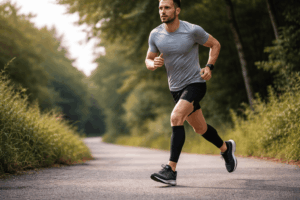
Compression shorts should be worn directly against the skin, snug but comfortable, covering the hips, groin, and upper thighs evenly. They are designed to support muscles, reduce friction, and improve comfort during movement or recovery.
When worn correctly, compression shorts enhance stability, blood flow, and mobility. When worn incorrectly, they can cause discomfort or limit performance.
Key takeaways:
- Compression shorts must fit snugly without restricting circulation.
- They are meant to be worn directly on the skin.
- Proper fit prevents chafing and improves support.
How tight should compression shorts be?
Compression shorts should feel firm but not restrictive. You should be able to move freely without numbness, pinching, or pressure points.
A proper fit means:
- No rolling or slipping during movement
- No deep marks on the skin
- Full range of motion when squatting or stretching
If discomfort appears after a few minutes, the size is likely incorrect.
How to wear men’s compression shorts properly
How to wear men’s compression shorts starts with correct positioning. The waistband should sit comfortably above the hips, with fabric lying flat across the thighs and groin.
Compression shorts can be worn:
- Alone, for workouts or running
- Under regular shorts, for added support and modesty
They are designed to replace underwear, not layer over it.
How to wear Nike compression shorts for training
How to wear Nike compression shorts follows the same core principles as any compression garment, with a focus on mobility and breathability. They should sit high on the waist and stay in place during dynamic movements such as running, jumping, or lifting.
For training, wear them:
- Directly against the skin
- Without underwear underneath
- Either alone or under loose athletic shorts
Nike compression shorts are designed to move with the body. If they shift or bunch up, the size or model may not be appropriate for your activity.
How to layer compression shorts correctly
Layering depends on comfort and context. Compression shorts are often used as a base layer under training shorts or uniforms.
Best layering practices:
- Choose lightweight outer shorts for airflow
- Avoid thick fabrics that trap heat
- Ensure the outer layer does not compress further
For high-intensity workouts, wearing compression shorts alone helps reduce overheating and skin irritation.
Practical checklist:
- Compression shorts worn directly on skin
- No extra underwear underneath
- Flat seams and no fabric folds
Common mistakes to avoid
Even high-quality compression shorts can feel uncomfortable if worn incorrectly.
Avoid:
- Wearing a size that is too small
- Folding the waistband
- Layering over thick underwear
- Using worn-out compression fabric
Poor fit reduces both comfort and effectiveness.
How long to wear compression shorts after vasectomy?
How long to wear compression shorts after vasectomy depends on comfort and medical advice, but most men are advised to wear them for 48 to 72 hours continuously after the procedure.
Compression shorts help by:
- Reducing swelling
- Limiting excessive movement
- Providing gentle scrotal support
During the first few days, they should be worn day and night, removing them only for hygiene.
After the first few days
Once swelling and discomfort decrease, compression shorts can be worn:
- During the day only
- For light activity or walking
- For up to 7 days, if needed for comfort
Wearing compression shorts longer than necessary does not speed up healing and may cause unnecessary pressure.
Key data : Most men feel comfortable transitioning away from compression support within one week after vasectomy.
How to wear a cup with compression shorts
How to wear a cup with compression shorts requires choosing shorts designed with a built-in pouch or cup pocket.
Steps to follow:
- Insert the cup into the designated pouch
- Ensure the cup sits flat and centered
- Adjust the waistband so pressure is evenly distributed
Never place a cup directly against bare skin without a pouch, as this can cause irritation and instability during movement.
When compression shorts are not recommended
Compression shorts should not be worn if they cause:
- Numbness or tingling
- Increased pain after surgery
- Excessive heat or moisture buildup
In these cases, switching to lighter support or loose underwear is safer.

How to wear compression shorts in everyday situations
Compression shorts are not limited to sports or recovery. They can also be worn for daily comfort, long walks, travel, or light activity. The key is choosing the right compression level and wearing them for an appropriate duration.
For everyday use:
- Wear them for a few hours at a time
- Avoid wearing them all day if not needed
- Choose breathable fabrics to reduce heat buildup
Wearing compression shorts too long without a break may cause discomfort, especially in warm environments.
Quick comparison: when and how to wear compression shorts
| Situation | How to wear them | Duration |
| Training | Directly on skin, no underwear | During workout |
| Running | Alone or under shorts | 30–90 minutes |
| After vasectomy | Snug support, day and night | 2–7 days |
| With protective cup | In built-in pouch only | During activity |
| Daily comfort | Light compression | A few hours |
Final tips for wearing compression shorts correctly
To get the most benefit from compression shorts:
- Choose the correct size
- Wear them directly against the skin
- Avoid unnecessary layering
- Replace them once elasticity weakens
How to wear compression shorts comes down to balance: enough compression to support, but enough comfort to move freely.
Used properly, compression shorts can improve comfort, support, and confidence in both athletic and everyday situations.